HKI’s 25th National Working Meeting Calls for Faster Investment Realization and Stronger Industrial Ecosystems
JAKARTA, August 1, 2026 – As global companies reassess their manufacturing footprints amid shifting supply chains and intensifying competition for investment, Indonesia’s industrial estates are positioning themselves to capture the next wave of global investment by offering more than land: speed, certainty and integrated industrial ecosystems.
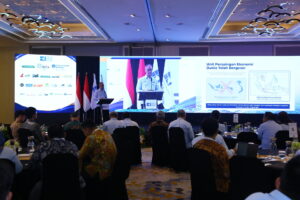
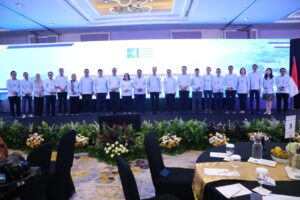
The message was underscored at the Business Forum and 25th National Working Meeting (RAKERNAS XXV) of the Indonesian Industrial Estates Association (HKI), held in Jakarta on July 30–31, 2026. The forum brought together senior national policymakers and industrial estate managers from across Indonesia to discuss how the country can strengthen its competitiveness, accelerate investment realization and ensure that investment commitments translate into factories, production, jobs and exports.
The RAKERNAS XXV was opened by Minister of Industry Agus Gumiwang Kartasasmita and attended by Minister of Environment and Head of the Environmental Control Agency Moh Jumhur Hidayat, Chairman of the National Economic Council Luhut Binsar Pandjaitan and Coordinating Minister for Economic Affairs Airlangga Hartarto. Their participation underscored the strategic role of industrial estates in Indonesia’s national industrialization agenda and the importance of cross-sectoral coordination in strengthening the country’s investment ecosystem.
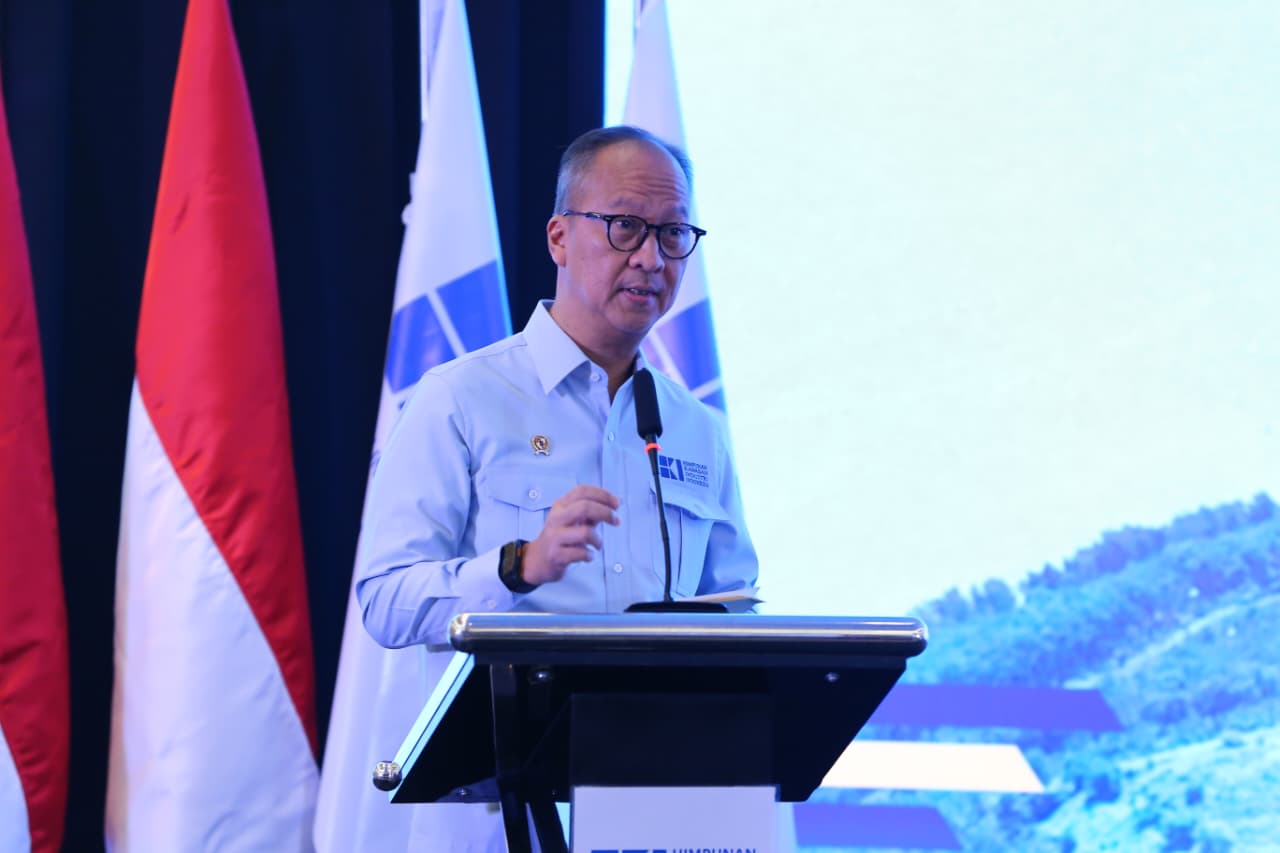
In his address, Minister of Industry Agus Gumiwang Kartasasmita called on industrial estate managers to fundamentally rethink the way they compete for global investment.
According to Agus, the global investment landscape has changed significantly. Investors are no longer comparing Indonesia only with other countries, but increasingly comparing one industrial estate with another across different markets.
An industrial estate in West Java, Central Java or East Java, for example, is now competing directly with industrial locations in Vietnam, Thailand, Malaysia, India and Mexico.
“The unit of competition in the global economy has shifted. Competition is no longer only country versus country, but industrial estate versus industrial estate. Ultimately, national industrial competitiveness is determined by the ability of industrial estates to provide added value to investors,” Agus said.
The Minister highlighted that Indonesia is currently benefiting from a window of opportunity created by global trade fragmentation, supply chain restructuring and geopolitical developments. These developments are encouraging multinational companies to seek new production locations and reassess their global supply chains.
However, Agus warned that the opportunity will not remain open indefinitely.
“The window of opportunity will not remain open forever. The countries and industrial estates that are most prepared will be the ones that win investment,” he said.
For investors, the ability to move quickly from commitment to production is becoming increasingly important. Regulatory certainty, licensing processes, infrastructure readiness, utility availability and the overall ease of establishing and operating a business can determine whether an investment is realized in Indonesia or directed to another competing location.
This is why, Agus emphasized, industrial estates must change the value proposition they offer to investors.
“What we sell is no longer land. What we sell is time.”
The statement reflects a broader transformation taking place in the industrial estate sector. Investors are no longer looking solely at land prices or the size of an industrial estate. They are increasingly assessing how quickly they can obtain certainty, develop their facilities, access reliable utilities and begin commercial production.
Agus called on industrial estates to evolve from conventional developers into investment enablers capable of providing comprehensive industrial ecosystems.
Beyond land and basic infrastructure, industrial estates are expected to support investment services, innovation, human capital development, digitalization and the acceleration of green industrial development.
The Minister also stressed that the success of an industrial estate should no longer be measured simply by the amount of land developed. More relevant indicators include occupancy rates, the number of operating tenants, realized investment value and the contribution of industrial estates to national industrial growth.
“Adding industrial estates without attracting tenants only increases the supply of land, not industrialization,” Agus said.
To strengthen competitiveness, he highlighted three key foundations that must be addressed: regulatory certainty, infrastructure readiness and energy availability.
In licensing, industrial estates should be able to serve as a single point of certainty for investors, helping reduce uncertainty and fragmentation throughout the investment process.
Infrastructure readiness must include reliable connectivity to roads and ports, utility networks, raw water supply, wastewater treatment and other supporting facilities that influence investment decisions.
Energy availability is equally critical. Agus emphasized that renewable energy is no longer merely an environmental issue, but an increasingly important factor in global trade and the competitiveness of Indonesian products in international markets.
“If industrial estates cannot provide reliable and increasingly greener energy, we will not only lose competitiveness, but also lose potential tenants because of global market requirements,” he said.
The Minister further highlighted the importance of strengthening the regulatory framework governing industrial estates through the Draft Industrial Estate Law currently being discussed with the House of Representatives. He encouraged HKI to continue providing practical input to ensure that the future regulation strengthens the role of industrial estates as providers of industrial ecosystems while reducing barriers between investment commitments and the start of production.
From Attracting Investment to Accelerating Realization
Building on the strategic direction outlined by the Minister, the RAKERNAS XXV discussions identified a critical priority for Indonesia’s next phase of industrial growth: ensuring that investment commitments are translated into tangible economic activity.
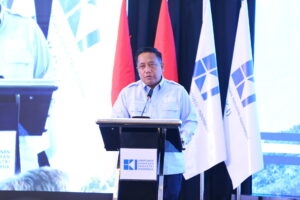
Chairman of HKI, Akhmad Ma’ruf Maulana, said that Indonesia already possesses many of the fundamental advantages needed to become one of Asia’s most competitive investment destinations, including a large domestic market, demographic potential, abundant natural resources, a strategic position in global supply chains and the government’s commitment to downstream industrial development.
However, these advantages must be supported by regulatory certainty, responsive services and the ability to resolve investment bottlenecks efficiently and consistently.
“Indonesia does not lack investors. We see directly how investors come, select locations, initiate their investment processes and, in many cases, become part of the industrial ecosystems that grow within the estates we manage,” Ma’ruf said.
According to Ma’ruf, the key challenge is ensuring that investment interest is rapidly transformed into factory construction, production, exports and job creation.
Global investors, he noted, increasingly assess not only market size and natural resources, but also the speed at which they can obtain business certainty, the readiness of industrial land, the reliability of electricity and gas supplies, logistics infrastructure, regulatory consistency and the ability of government institutions to resolve issues once an investment process is underway.
“Investors do not look at problems based on the respective authorities of ministries or institutions. Investors see Indonesia as one investment destination. Therefore, the solutions must also be delivered in an integrated manner, as one system that provides certainty, speed and consistency,” he said.
HKI views this approach as aligned with the spirit of Indonesia Incorporated, which calls for stronger coordination across government institutions. From the perspective of the business community, Indonesia Incorporated means ensuring that government institutions work as an integrated system capable of providing certainty to investors from the planning stage through to commercial production.
Tackling Investment Bottlenecks
Based on the discussions held during RAKERNAS XXV, HKI identified a number of recurring bottlenecks affecting investment realization, including the synchronization of spatial planning and land matters, cross-agency licensing processes, environmental approvals, certainty of electricity and industrial gas supplies, infrastructure connectivity and coordination between central and local governments.
These challenges can extend the time required to realize investments, increase business costs and potentially affect Indonesia’s competitiveness against other countries competing for the same global investment opportunities.
The experience of HKI members provides a unique perspective in addressing these challenges. Industrial estate managers increasingly operate not only as developers, but also as industry players that build, own and operate various businesses within their respective estates.
This gives HKI members direct experience across the entire investment cycle—from land and infrastructure preparation, licensing and facility development to the operational challenges faced by industries once production begins.
The recommendations formulated through RAKERNAS XXV therefore extend beyond industrial estate development. They address broader priorities including manufacturing productivity, supply chain efficiency, export competitiveness and ease of doing business.
“Every delayed investment means more than a delayed factory. It also means delayed job creation, exports, technology transfer, growth of local businesses and state revenues. Investment bottlenecks must therefore be viewed as a strategic national issue that requires an integrated solution,” Ma’ruf said.
HKI emphasized that the recommendations developed during the RAKERNAS were not intended as a list of complaints or criticism of the government. Instead, they were formulated as a package of practical solutions based on direct experience in the field.
The recommendations include regulatory harmonization, faster licensing processes, stronger certainty in spatial planning and land matters, more reliable electricity and industrial gas supplies, streamlined inter-ministerial coordination, improved connectivity to industrial estates and stronger institutional mechanisms to resolve investment obstacles quickly and comprehensively.
“We are not coming with complaints. We are bringing a diagnosis based on experience in the field, together with recommendations and solutions that can be implemented. HKI wants to be a strategic partner of the government in ensuring that investments already committed to Indonesia are realized and deliver the greatest possible benefits to society,” Ma’ruf said.
As a follow-up to the outcomes of RAKERNAS XXV, HKI has submitted a letter to President Prabowo Subianto requesting an opportunity to present the recommendations directly.
HKI believes that the practical experience of industrial estate managers, who interact with investors throughout the investment cycle, can provide implementable input to accelerate national industrialization, strengthen downstream industries and improve Indonesia’s competitiveness in the global investment landscape.
Positioning Indonesia for the Next Wave of Investment
The discussions at RAKERNAS XXV come at a time when global companies are reassessing their manufacturing footprints and supply chains. For Indonesia, this presents a significant opportunity to strengthen its position as a global manufacturing and industrial investment destination.
However, capturing this opportunity will depend on Indonesia’s ability to provide investors with the certainty, speed and industrial ecosystem required to move from investment decisions to actual production.
HKI also emphasized that investment acceleration must go hand in hand with stronger environmental governance. Regulatory certainty, consistent procedures and effective inter-agency coordination are essential to strengthen environmental protection while providing legal certainty for businesses.
At the same time, infrastructure connectivity, reliable energy supplies and sustainable industrial estate development must be pursued as an integrated strategy to strengthen Indonesia’s long-term competitiveness.
For HKI, the message emerging from the Business Forum and RAKERNAS XXV is clear: the next phase of Indonesia’s industrial growth will not be determined simply by how much land is available, but by how quickly and confidently investors can establish operations and become part of a competitive industrial ecosystem.
As global companies search for new production bases and more resilient supply chains, Indonesia has an opportunity to compete for the next wave of investment.
HKI is committed to working alongside the government and the investment community to turn that opportunity into tangible economic outcomes—operating factories, productive industries, quality employment, increased exports, technology transfer and sustainable industrial growth.
“RAKERNAS must not stop as an organizational forum. Its outcomes must become a real contribution to the country. Indonesia has a major opportunity to become a global investment destination. What we need now is a collective commitment to resolve investment bottlenecks so that these opportunities translate into operating factories, jobs, increased exports and greater prosperity for the people,” Ma’ruf concluded.